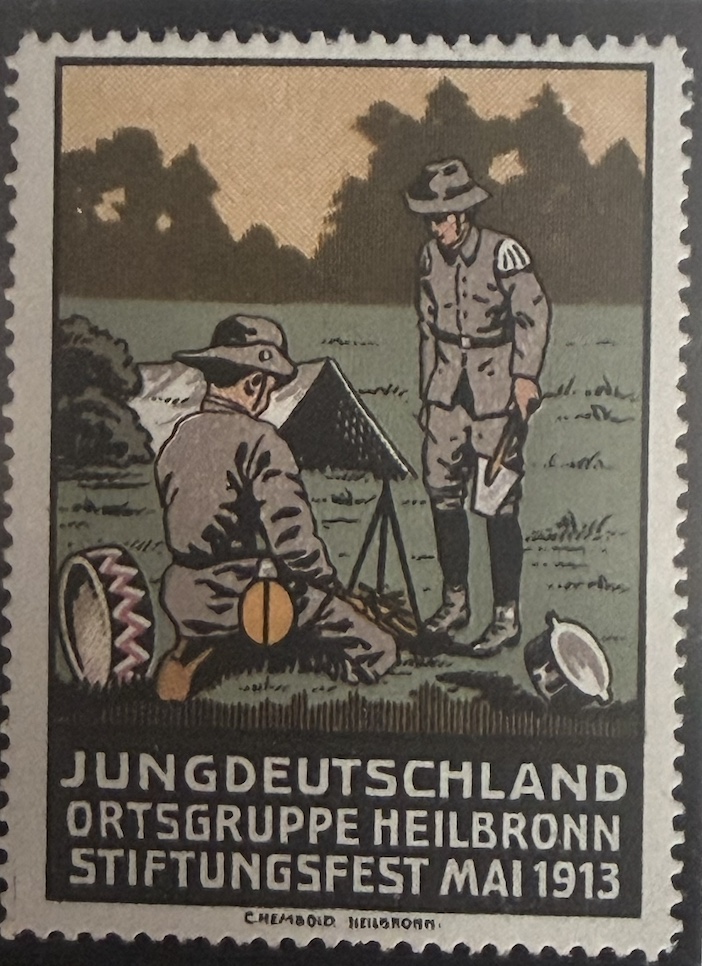
Camp inspection
Piece details
Identity
- Piece codeStamp code YYYY.ENT.SS-PP — series code plus stamp order (e.g. 1900.CGH.01-02).
1913.DEU.02-12- SeriesThe set this stamp belongs to.
- Pfadfinder — Ausstellung Stuttgart
1913.DEU.02· piece 12 of 14 - EntityPostal authority that issued the stamps (country, territory, or historical entity).
 Germany (DEU)
- Year / date
- 1913
- Face valueDenomination on the stamp; +n is a charity surcharge when present.
- No face value
- Format
- Stamp
- TypeIssue kind. Charity issue = postage + voluntary surcharge (e.g. 6+4), not an overprint.
- Cinderella
- Colors
- Multicoloured
- CollectionIn collection if you have it; Purchased if it is bought but not yet received (do not buy again); Wanted otherwise.
- ✓ In collection
Production
- PerforationsHole gauge between stamps (e.g. 12, 13½). Higher ≈ finer.
- Perforated
- Printing
- Lithography
Notes
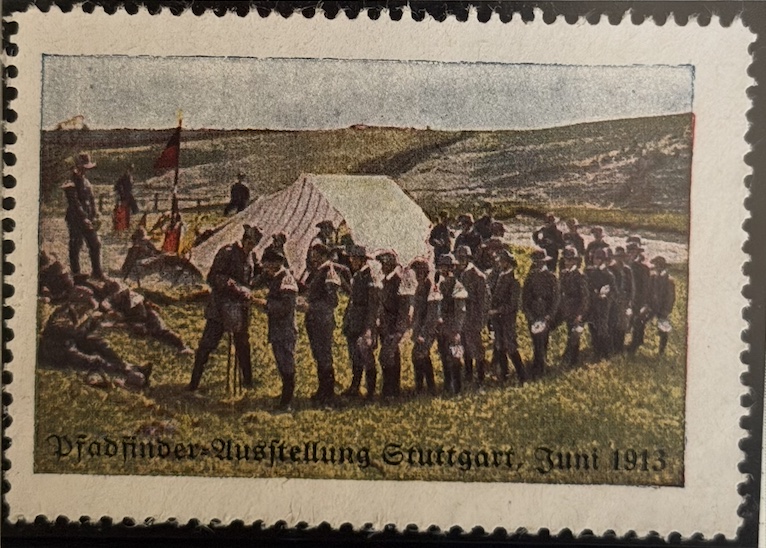
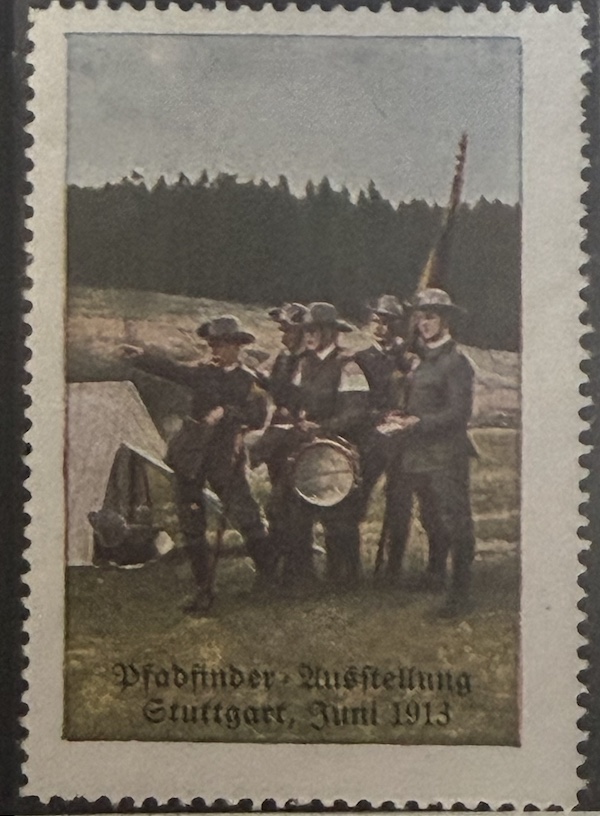
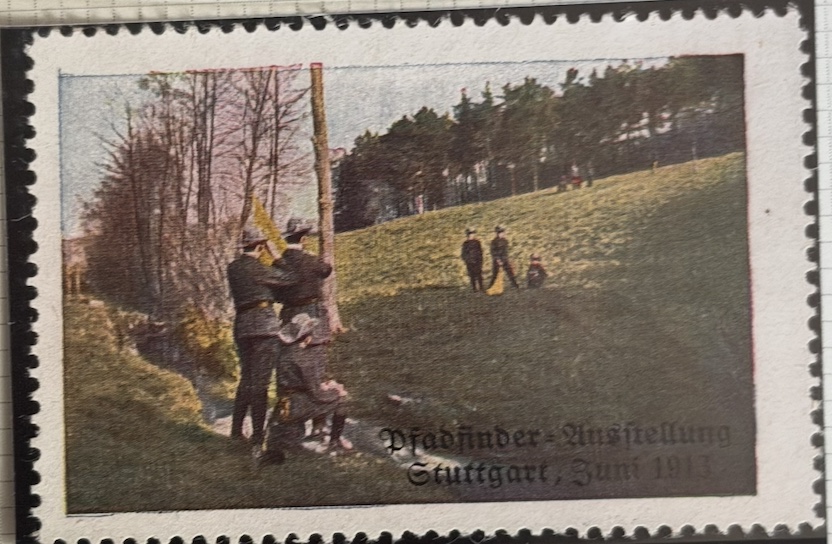
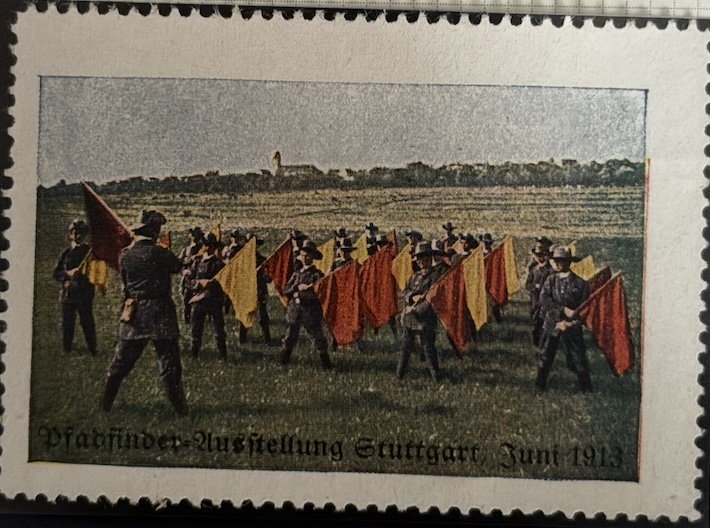
Photographic label: a line of Scouts drawn up before a marquee, standards to the left.
Series history
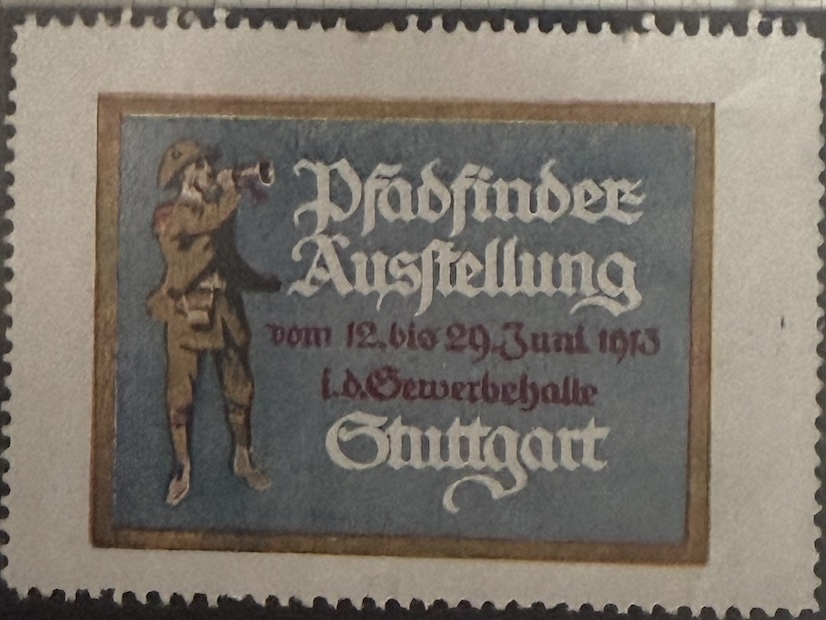
Fourteen labels printed for the Pfadfinder-Ausstellung — the Scout Exhibition — held in the Gewerbehalle at Stuttgart from 12 to 29 June 1913. The dates and the venue are spelled out on one of the drawn designs; the rest carry the shorter caption Pfadfinder-Ausstellung Stuttgart, Juni 1913.
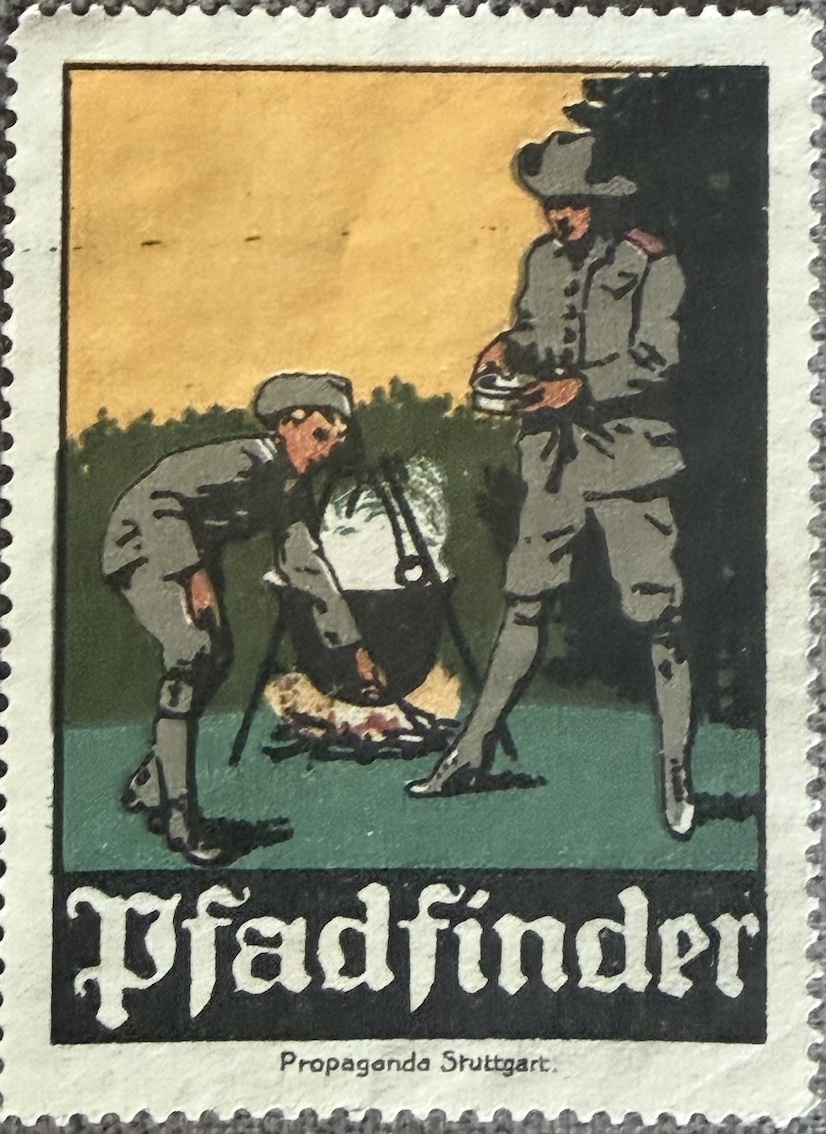
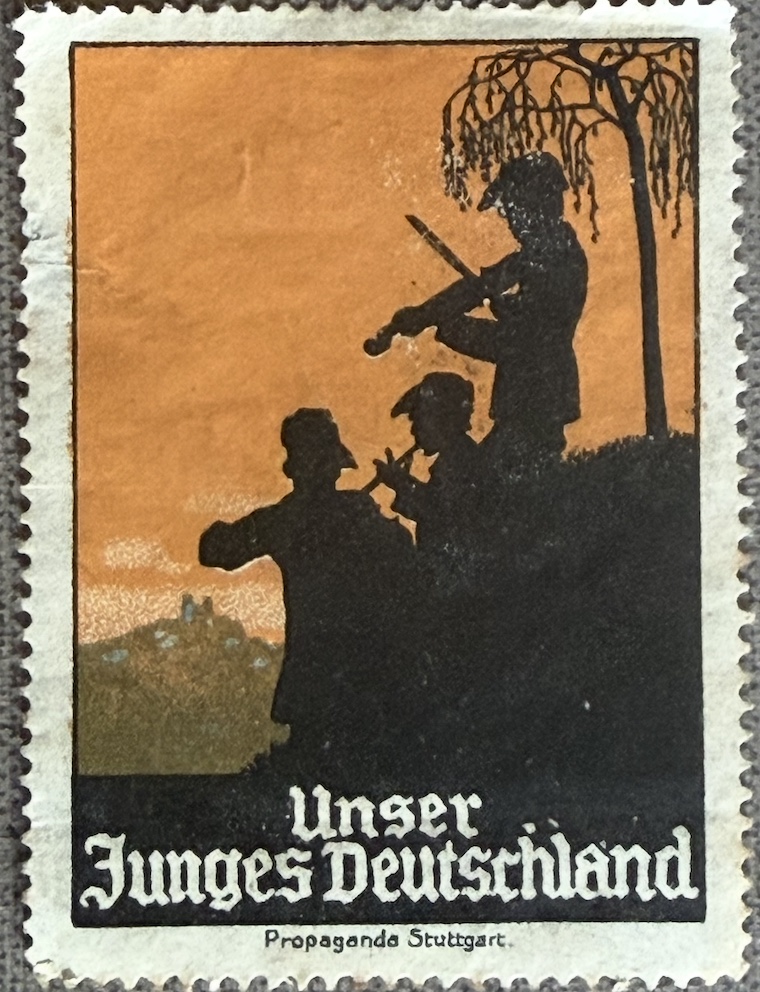
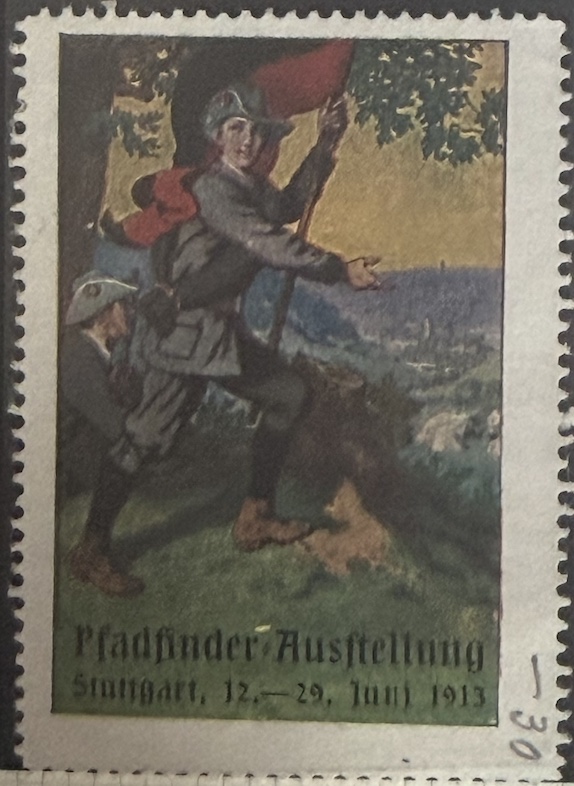
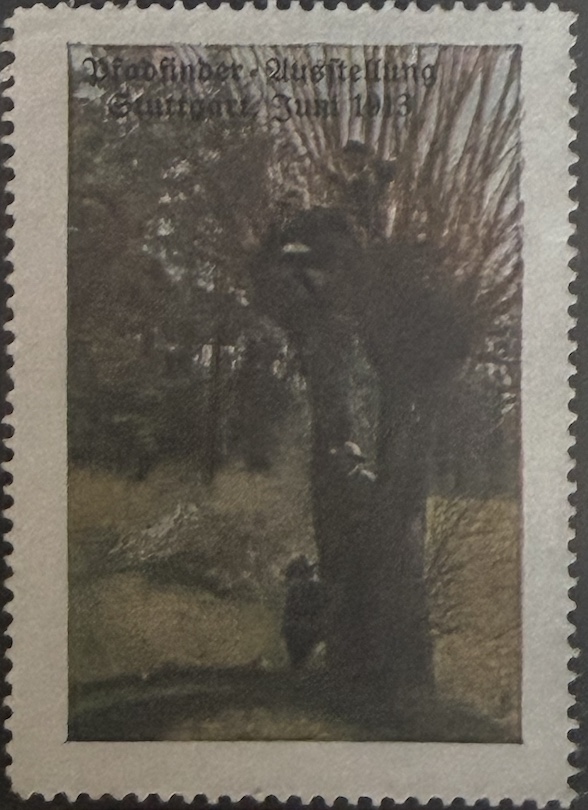
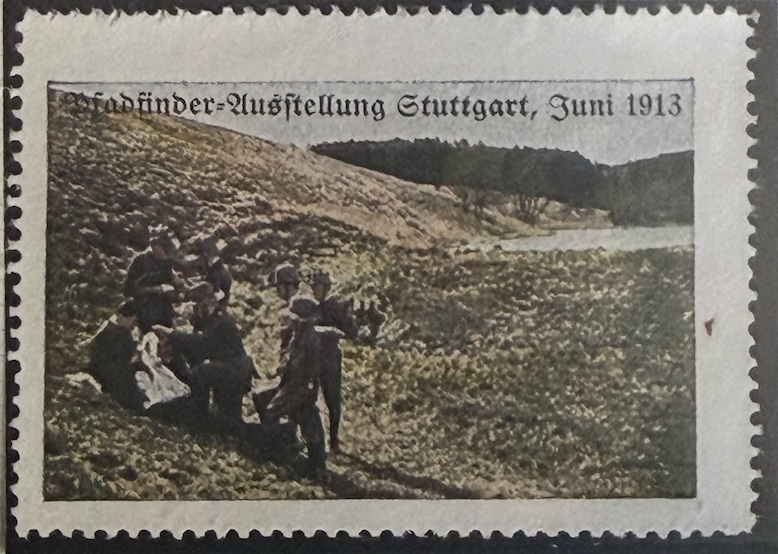
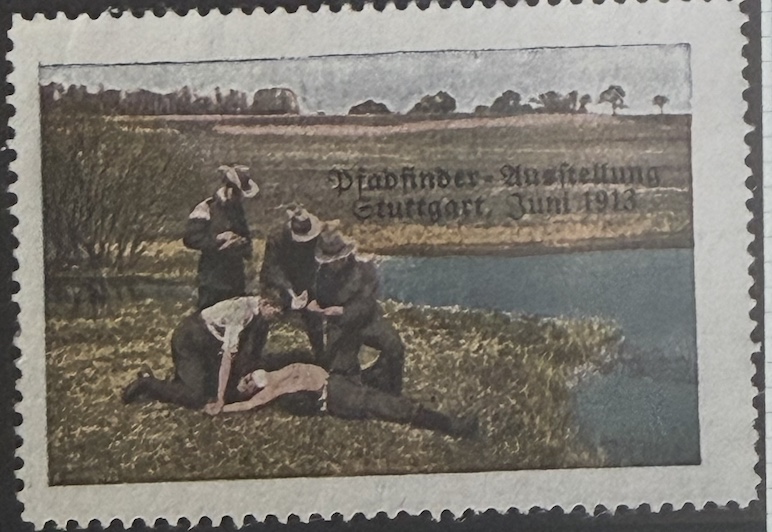
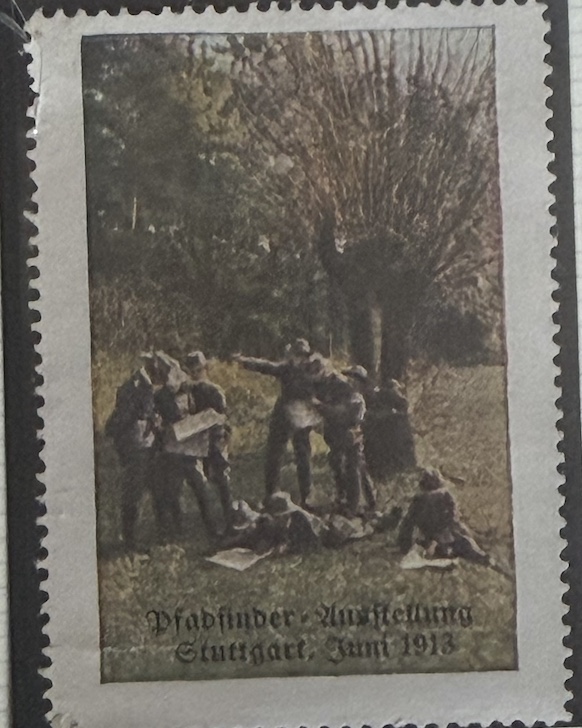
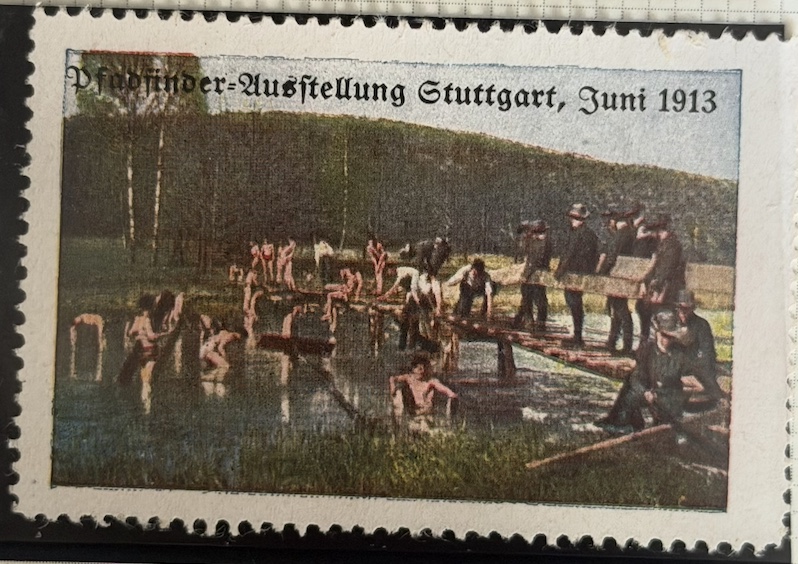
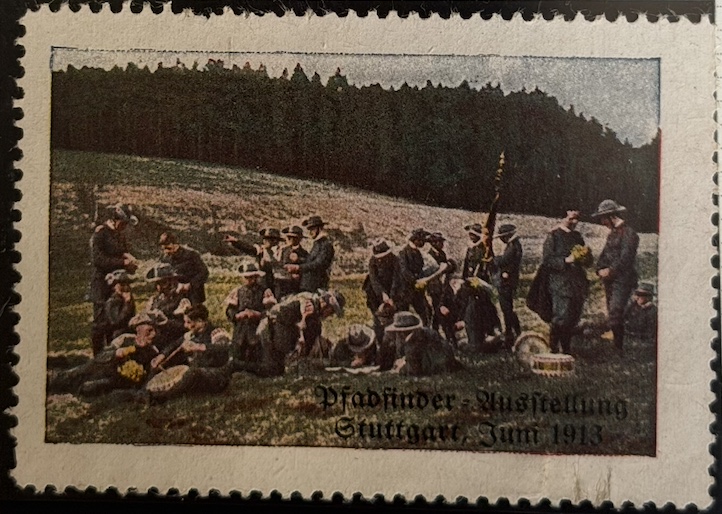
The set divides in two. Four are drawn lithographs in the poster style of the day, three of them bearing the imprint of the agency Propaganda Stuttgart — Scouts cooking at a fire under the single word PFADFINDER; a silhouette of youths making music at dusk captioned UNSER JUNGES DEUTSCHLAND; a Scout with field glasses carrying the exhibition announcement; and a standard bearer on a ridge above a river valley. The other ten are tinted photographs of German Scouts in camp: pitching and inspecting tents, reading maps, practising first aid, signalling with flags, bridging and bathing, resting on the meadow.
In German of 1913 «Propaganda» meant advertising, without the later pejorative sense, so the imprint names the producing agency rather than describing the content.
German Scouting was then barely two years old — the Deutscher Pfadfinderbund had been founded in 1911 — and the exhibition set out to show the public what the movement did. The photographic labels are the record of that: not emblems or portraits, but the activities themselves.
All fourteen are cinderellas, without face value or postal validity. They were issued a month after the Jungdeutschland labels of Heilbronn, and the two sets together document how closely the nationalist youth leagues and the Scout movement ran in Württemberg on the eve of the First World War.