
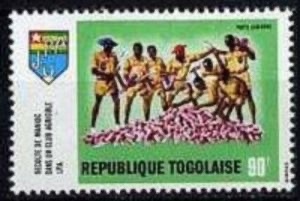
Manioc harvest
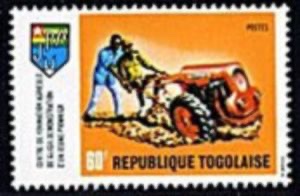
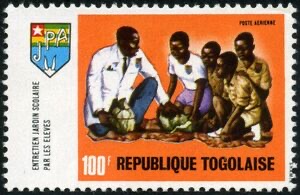
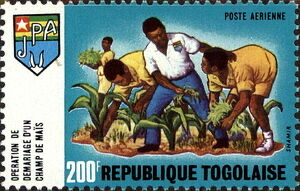
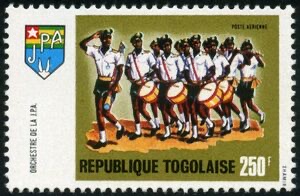
Piece details
Identity
- Piece codeStamp code YYYY.ENT.SS-PP — series code plus stamp order (e.g. 1900.CGH.01-02).
1969.TGO.01-17- SeriesThe set this stamp belongs to.
- Rural Pioneer Youth
1969.TGO.01· piece 17 of 21 - EntityPostal authority that issued the stamps (country, territory, or historical entity).
 Togo (TGO)
- Year / date
- 1969-10-18
- Face valueDenomination on the stamp; +n is a charity surcharge when present.
- 90 f
- Format
- Stamp
- TypeIssue kind. Charity issue = postage + voluntary surcharge (e.g. 6+4), not an overprint.
- Airmail
- Colors
- Multicoloured
- CollectionIn collection if you have it; Purchased if it is bought but not yet received (do not buy again); Wanted otherwise.
- ✓ In collection
Production
- Designer
- Gabriel Shamir and Maxim Shamir
- Process
- Offset lithography
- PerforationsHole gauge between stamps (e.g. 12, 13½). Higher ≈ finer.
- Comb 14
- Size
- 40 × 25 mm
Catalog numbers
- ScottScott catalog number (Americas).
- TG C115
- MichelMichel catalog number (Europe / DE).
- TG 750
- YvertYvert & Tellier catalog number (FR).
- TG PA117
- Stanley GibbonsStanley Gibbons catalog number (UK / Commonwealth).
- TG 691
Notes
Youths in yellow uniforms behind a pile of harvested manioc. Left strip: JPR fleur-de-lis shield and RÉCOLTE DE MANIOC DANS UN CLUB AGRICOLE J.P.R. Inscribed POSTE AERIENNE.
Series history
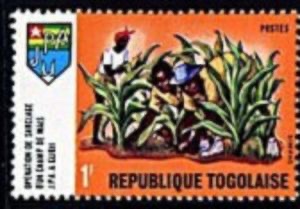
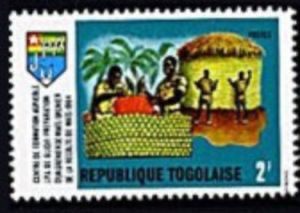
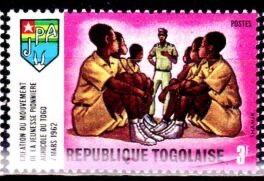
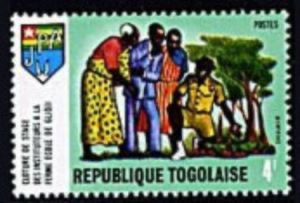
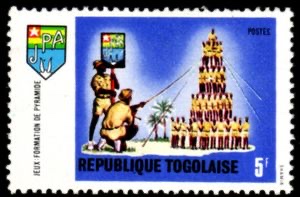
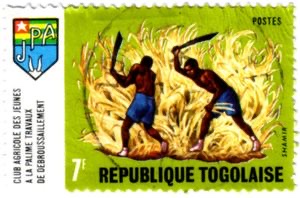
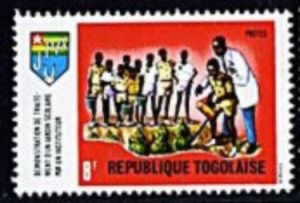
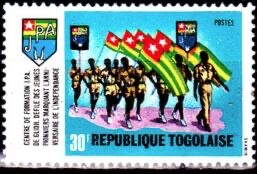
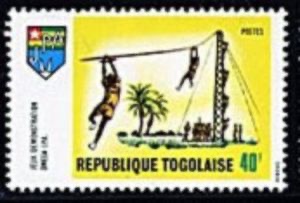
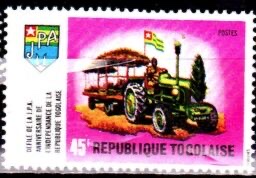
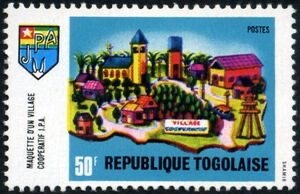
Togo issued twenty-one lithographed stamps on 18 October 1969 for the Jeunesse pionnière rurale and the related Jeunesse pionnière agricole. Some listings date part of the set 21 March 1970. Gabriel Shamir and Maxim Shamir designed the series. The stamps measure 40 × 25 mm and are comb perforated 14. Sixteen values are ordinary postage, inscribed POSTES; the 90 f, 100 f, 200 f, 250 f and 500 f are inscribed POSTE AÉRIENNE. Each design carries REPUBLIQUE TOGOLAISE and a left-hand shield with the Togolese flag, lettered JPR, JPA or JPO, often with a fleur-de-lis. The 3 f commemorates the creation of the agricultural Pioneer movement in March 1962. Several values show the agricultural training centre at Glidji. An imperforate printing of the set is also recorded. Sources give no printer.